EtherealX Raises $20.5M to Build India’s First Fully Reusable Rocket
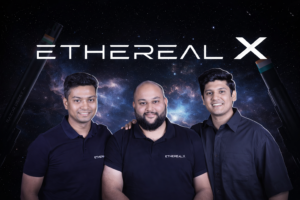
EtherealX Raises $20.5M to Build India’s First Fully Reusable Rocket
How a Bengaluru Startup Is Aiming to Transform the Global Space Launch Market
The global race to make space access cheaper and more efficient is accelerating—and an ambitious Indian startup is stepping into the spotlight. EtherealX, a Bengaluru-based spacetech company, recently secured $20.5 million in Series A funding, positioning itself as one of the most promising players in India’s rapidly expanding private space ecosystem.
With a bold vision to develop fully reusable launch vehicles, the startup is aiming to dramatically reduce the cost of satellite launches and compete in a market currently dominated by companies like SpaceX. The new investment and technological milestones achieved over the last few months have put EtherealX firmly on the radar of global investors and aerospace experts.
The Funding That Accelerated EtherealX’s Mission
In January 2026, EtherealX announced that it had raised $20.5 million (about ₹185 crore) in a Series A funding round. The round was co-led by TDK Ventures and BIG Capital, with participation from prominent investors including Accel, Prosus, YourNest Venture Capital, BlueHill Capital, Campus Fund, and Riceberg Ventures.
This funding round significantly boosted the startup’s valuation to approximately $80–80.5 million, representing a sharp increase compared to its earlier seed round.
The company plans to deploy the capital toward:
- Developing and testing reusable rocket technology
- Advancing engine testing and propulsion systems
- Expanding manufacturing and testing infrastructure
- Preparing for upcoming technology demonstration launches
The funding also reflects growing investor confidence in the deep-tech and spacetech sectors in India, which have seen increasing venture capital interest in recent years.
EtherealX’s Big Bet: Fully Reusable Rockets
Founded in 2022 by Manu J. Nair, Shubhayu Sardar, and Prashanth Sharma, EtherealX is building a next-generation medium-lift launch vehicle called “Razor Crest Mk-1.”
Unlike traditional rockets that are discarded after a single launch, the Razor Crest Mk-1 is designed to be fully reusable, meaning both the booster stage and the upper stage can return safely after launch.
This approach could dramatically reduce launch costs and increase the frequency of missions.
The rocket is expected to deliver:
- Up to 8 tonnes of payload to Low Earth Orbit (LEO) in fully reusable mode
- Higher payload capacities in partially reusable or expendable configurations
- Missions to geostationary transfer orbit and lunar trajectories in future upgrades
If successful, this technology could significantly reshape the economics of satellite deployment.
Advanced Engine Development and Testing
EtherealX is also designing its propulsion systems entirely in-house. The company is developing two advanced rocket engines:
- Stallion Engine – A powerful booster engine that provides thrust during liftoff
- Pegasus Engine – An upper-stage engine that operates once the rocket reaches space
These engines are currently undergoing testing, including hot-fire engine tests expected in 2026, a critical step toward flight qualification.
The company’s flagship rocket will use multiple clustered engines, enabling higher thrust levels and improved payload capacity.
A Clear Roadmap to Launch
EtherealX has outlined a clear development roadmap for the coming years.
Key milestones include:
- 2026: Engine development and testing
- 2027: Technology demonstration launch
- 2028: First commercial launch of Razor Crest Mk-1
The technology demonstration vehicle planned for 2027 will validate the rocket’s propulsion, recovery, and reusability systems.
If these tests succeed, EtherealX could become one of the first Indian startups to operate a reusable orbital launch system.
Early Commercial Demand Already Exists
Even before completing its first launch, EtherealX has already attracted significant commercial interest.
The company has reportedly signed launch agreements and memoranda of understanding worth around $130 million with global customers, including international space organizations and launch service aggregators.
This early demand highlights the growing need for affordable launch services, especially as satellite constellations for communication, earth observation, and defense continue to expand worldwide.
Building the Infrastructure for the Future
To support its ambitious rocket program, EtherealX is also building major infrastructure.
The startup has secured 150 acres of land in Andhra Pradesh to establish a large manufacturing and testing campus dedicated to rocket development and engine testing.
This facility is expected to play a key role in accelerating rocket production and preparing for upcoming launch missions.
Why EtherealX Matters for India’s Space Economy
India’s space sector is undergoing a major transformation as private companies begin to play a larger role in satellite launches and space infrastructure.
The global space industry is expanding rapidly, driven by demand for:
- Satellite internet constellations
- Earth observation data
- Space-based defense systems
- Lunar and deep-space missions
In this evolving landscape, startups like EtherealX could help position India as a competitive hub for affordable launch services.
Reusable rocket technology, in particular, has the potential to reduce launch costs dramatically—making space more accessible to governments, research organizations, and commercial companies worldwide.
The Road Ahead
EtherealX is still in the early stages of development, but the company’s progress over the past year shows strong momentum. With fresh funding, advanced propulsion technology, and growing customer interest, the startup is taking important steps toward its first orbital launch.
If the company successfully demonstrates reusable rocket technology in the coming years, it could redefine India’s role in the global space launch market.
In an industry where innovation determines the future, EtherealX is betting that reusable rockets will be the next giant leap for India’s space ambitions.