SUN Mobility: Accelerating the Electric Vehicle Revolution with Battery Swapping Innovation
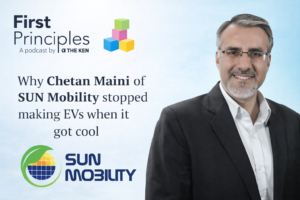
SUN Mobility: Accelerating the Electric Vehicle Revolution with Battery Swapping Innovation
The global transportation industry is undergoing a dramatic transformation as governments, businesses, and consumers increasingly shift toward electric mobility. While electric vehicles (EVs) promise cleaner and more sustainable transportation, challenges such as long charging times, high battery costs, and limited charging infrastructure continue to slow mass adoption.
This is where SUN Mobility is making a significant impact. The Bengaluru-based clean-tech company is pioneering battery swapping technology, an innovative approach that allows EV users to replace depleted batteries with fully charged ones in minutes.
By combining advanced battery technology, smart energy infrastructure, and strategic partnerships, SUN Mobility is helping build the backbone of the EV ecosystem—not just in India, but globally.
A Vision to Transform Electric Mobility
SUN Mobility was founded in 2017 by Chetan Maini and Uday Khemka, both well-known figures in the electric mobility sector. Their vision was clear: remove the biggest barriers to EV adoption by reimagining how batteries are used, charged, and distributed.
Instead of relying solely on plug-in charging stations, SUN Mobility introduced a Battery-as-a-Service (BaaS) model that separates battery ownership from the vehicle itself. Under this model, drivers purchase or lease electric vehicles without the battery and simply pay for energy usage through battery swaps.
At a SUN Mobility swap station, a depleted battery can be replaced with a fully charged one in just a few minutes—dramatically reducing vehicle downtime. This solution is particularly valuable for commercial fleets such as delivery services, logistics operators, and public transportation networks where efficiency and uptime are critical.
Recent Funding Strengthening Growth
As the EV infrastructure market expands, investors are increasingly recognizing the importance of companies like SUN Mobility that enable large-scale electrification.
Over the years, SUN Mobility has raised more than $135 million in funding, attracting investment from major global institutions including Helios Investment Partners, InfraCo Asia, and Vitol.
In recent months, the company secured additional capital to support the expansion of its battery swapping infrastructure and technological capabilities. These funds are being used to:
- Expand battery swapping networks across major cities
- Increase manufacturing capacity for smart batteries
- Invest in advanced battery management software
- Strengthen partnerships with EV manufacturers and fleet operators
The funding highlights strong investor confidence in the company’s long-term vision of building a scalable and efficient EV energy ecosystem.
Strategic Partnerships Driving EV Adoption
One of SUN Mobility’s biggest strengths is its ability to build partnerships across the mobility value chain. The company collaborates with vehicle manufacturers, energy companies, and fleet operators to deploy its battery swapping technology at scale.
A major partnership is with Indian Oil Corporation, one of India’s largest energy providers. Through this collaboration, the two companies aim to deploy thousands of battery swapping stations across multiple cities.
The partnership plans to roll out more than 10,000 swapping stations in over 40 cities, significantly expanding the availability of EV infrastructure.
By leveraging the vast retail fuel network of Indian Oil, SUN Mobility can rapidly scale its swapping infrastructure while making EV energy access more convenient for users.
Technology That Powers the Ecosystem
SUN Mobility’s technology platform is designed to support a wide variety of electric vehicles across multiple categories.
The company’s modular battery systems are vehicle-agnostic, meaning they can be used across different EV models including:
- Electric two-wheelers
- Three-wheelers
- Passenger vehicles
- Commercial cargo vehicles
- Electric buses
Each battery is integrated with advanced Internet of Things (IoT) sensors that monitor performance, temperature, and usage patterns in real time. This allows the company to optimize battery health, extend lifespan, and improve operational efficiency.
In addition, the company’s software platform provides real-time data analytics that help manage energy distribution across swap stations, ensuring that fully charged batteries are always available where demand is highest.
Growing Patent and Innovation Portfolio
Innovation remains a core pillar of SUN Mobility’s strategy. In recent months, the company has strengthened its research and development efforts, expanding its patent portfolio in battery swapping technology and energy management systems.
The company’s patents cover multiple areas including:
- Battery pack architecture
- Safety mechanisms for battery swapping
- Smart battery access control systems
- Energy logistics optimization
Recent patent activity also highlights the development of AI-powered energy management systems designed to predict battery demand, optimize station inventory, and improve fleet performance.
These innovations are crucial for scaling battery swapping networks in large urban environments where thousands of EVs may depend on reliable energy access.
Transforming Commercial EV Fleets
Battery swapping is especially valuable for commercial fleets where vehicle downtime directly affects revenue. For industries such as logistics, ride-hailing, and delivery services, waiting hours for EV charging is not practical.
SUN Mobility’s swapping model allows fleet vehicles to stay operational with minimal downtime. Instead of charging vehicles overnight or waiting for fast chargers, drivers can swap batteries and return to service immediately.
This provides several key advantages:
- Faster fleet turnaround times
- Lower total cost of ownership
- Reduced dependency on charging infrastructure
- Improved operational efficiency
As e-commerce and last-mile delivery markets grow rapidly, battery swapping is becoming a highly attractive solution for logistics companies looking to electrify their fleets.
Supporting India’s Clean Energy Goals
India has set ambitious goals to reduce carbon emissions and increase EV adoption across the country. Infrastructure providers like SUN Mobility are playing a crucial role in achieving these objectives.
By offering scalable battery swapping infrastructure, the company is helping accelerate EV adoption in both urban and semi-urban markets. Its solutions are particularly well suited for India’s transportation ecosystem, where two-wheelers and three-wheelers dominate daily mobility.
The company’s growing network of swapping stations is enabling thousands of vehicles to operate on clean energy, contributing to reduced emissions and improved urban air quality.
Expanding Toward Global Markets
While India remains its primary market, SUN Mobility is also exploring expansion opportunities in international markets. Countries across Asia, the Middle East, and Africa are showing increasing interest in battery swapping as a viable EV infrastructure model.
By partnering with global mobility providers and infrastructure investors, the company aims to deploy its technology in regions where rapid EV adoption requires scalable and cost-effective energy solutions.
This global expansion strategy could position SUN Mobility as one of the leading providers of battery swapping infrastructure worldwide.
The Road Ahead
The future of transportation will be electric, but the success of that transition will depend on efficient energy infrastructure.
SUN Mobility’s innovative battery swapping ecosystem offers a compelling solution to many of the challenges facing EV adoption today. With strong funding support, growing partnerships, and continuous technological innovation, the company is well positioned to become a major force in the global electric mobility landscape.
As cities around the world push toward cleaner transportation systems, SUN Mobility’s vision of fast, flexible, and accessible EV energy infrastructure may play a defining role in shaping the future of mobility.