Waymo’s $16 Billion Inflection Point: Why Autonomous Mobility Is Entering Its Most Critical Phase Yet
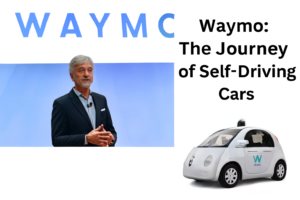
Waymo’s $16 Billion Inflection Point: Why Autonomous Mobility Is Entering Its Most Critical Phase Yet
Autonomous vehicles have long existed at the intersection of technological ambition and public skepticism. For over a decade, industry observers debated whether self-driving systems would remain experimental marvels or mature into commercially viable transportation networks. In early 2026, Waymo delivered one of the clearest answers yet.
With a landmark $16 billion funding round and a valuation approaching $126 billion, Alphabet’s autonomous driving subsidiary has not only captured investor attention but also redefined expectations for the robotaxi economy. The scale of this financing event represents more than capital accumulation — it signals a structural shift in how markets, regulators, and consumers perceive autonomous mobility.
Waymo is no longer viewed as a futuristic research project. It is increasingly regarded as a transportation platform with measurable demand, operational depth, and a credible path toward global scale.
Capital as a Strategic Weapon, Not a Safety Net
Large funding rounds are common in technology sectors driven by infrastructure, but Waymo’s raise stands apart in both magnitude and implication. Autonomous mobility is among the most capital-intensive industries in modern tech, requiring investment across:
-
Vehicle hardware and sensor stacks
-
AI model training and simulation systems
-
Fleet operations and maintenance
-
Regulatory compliance and safety frameworks
-
Mapping, routing, and data infrastructure
Unlike asset-light SaaS businesses, robotaxi operators must fund a deeply integrated ecosystem. Every additional city deployment demands logistical coordination, operational staffing, and localized regulatory engagement.
The $16 billion infusion therefore functions less as a financial cushion and more as a strategic acceleration mechanism. It enables Waymo to compress timelines that might otherwise span years — scaling fleets faster, expanding geographic coverage, and absorbing the inevitable costs associated with pioneering a new transportation paradigm.
Investors participating in the round appear to be making a long-term infrastructure bet: that autonomous ride-hailing networks could ultimately rival — or surpass — traditional mobility markets in both efficiency and economic impact.
From Technological Leadership to Operational Maturity
Waymo’s distinguishing advantage lies not merely in autonomy research but in real-world operational experience. The company has spent years refining its systems under live traffic conditions — a factor that increasingly separates viable operators from conceptual competitors.
By 2025, Waymo had delivered millions of fully autonomous rides, with services operating without human safety drivers in multiple U.S. metropolitan regions. This milestone is critical because autonomy at scale is less about algorithmic perfection and more about handling the unpredictable complexity of urban environments:
-
Dense pedestrian traffic
-
Construction-induced road deviations
-
Edge-case interactions with human drivers
-
Weather variability
-
Emergency vehicle navigation
Waymo’s progress demonstrates the importance of iterative deployment. Every ride contributes to data refinement, safety modeling, and behavioral prediction improvements. Over time, this creates a compounding advantage that is difficult for late entrants to replicate.
In practical terms, Waymo has transitioned from proving that autonomous vehicles can function to demonstrating that they can function reliably and repeatedly in commercial contexts.
The Economics of Robotaxis: A Long Game
The enthusiasm surrounding Waymo’s valuation is closely tied to the perceived economics of autonomous fleets. While short-term profitability remains complex, the long-term thesis is compelling.
Traditional ride-hailing models are constrained by driver availability, compensation dynamics, and utilization inefficiencies. Autonomous fleets, by contrast, promise structural advantages:
-
Continuous vehicle operation without labor constraints
-
Centralized fleet optimization
-
Reduced per-mile operating costs at scale
-
Potentially lower accident rates over time
However, the path to these efficiencies is neither immediate nor linear. Fleet depreciation, maintenance costs, software updates, insurance models, and regulatory compliance introduce new financial variables. Early-stage autonomous operators often endure extended periods of high expenditure before economies of scale materialize.
Waymo’s funding strength suggests confidence that the long-term cost curves will favor autonomy, particularly as hardware prices decline and software capabilities improve.
Scaling Challenges: The Non-Technical Barriers
Despite its momentum, Waymo’s expansion is governed by forces that extend beyond engineering. Autonomous vehicles operate within deeply regulated, socially sensitive ecosystems. Each city represents a distinct matrix of:
-
Transportation policy
-
Safety oversight
-
Insurance frameworks
-
Local political dynamics
-
Public trust considerations
Regulatory friction remains one of the most significant constraints on growth. Even technologically mature systems must navigate evolving legislative standards, liability structures, and incident reporting obligations.
Public perception is equally consequential. Isolated incidents involving autonomous vehicles — regardless of fault — can trigger disproportionate scrutiny. Transparency, safety reporting, and community engagement therefore become strategic imperatives, not public relations afterthoughts.
Waymo’s ability to expand will depend as much on institutional collaboration and societal confidence as on technological performance.
Competition and Industry Dynamics
Waymo’s position at the forefront of robotaxi deployment has intensified competitive pressure across the mobility and AI landscape. Major players are pursuing varied strategies:
-
Automotive manufacturers exploring embedded autonomy
-
Ride-hailing platforms integrating AV partnerships
-
AI-first startups focusing on autonomy software stacks
-
Electric vehicle leaders investing in self-driving capabilities
Yet a notable gap persists between ambition and operational reality. Achieving reliable Level-4 autonomy in dense urban conditions remains extraordinarily complex. Waymo’s head start in live deployments offers both a data advantage and a credibility moat.
The competitive landscape is likely to evolve toward hybrid ecosystems rather than winner-take-all dominance. Partnerships, licensing models, and infrastructure sharing may define the next phase of industry development.
Why This Moment Matters
Waymo’s funding milestone represents more than corporate success. It marks a broader inflection point for autonomous mobility as an industry.
For years, autonomous vehicles were framed as speculative technologies perpetually “five years away.” Today, they are increasingly visible components of urban transportation systems. Consumers are booking rides. Regulators are drafting frameworks. Investors are allocating large-scale capital.
This convergence of technology readiness, commercial deployment, and financial backing suggests that autonomous transportation is entering its most consequential phase yet — one defined not by prototypes, but by scale, economics, and societal integration.
Looking Forward
The coming years will test the resilience of the robotaxi model. Questions surrounding profitability timelines, regulatory harmonization, safety metrics, and competitive responses remain open.
What is clear, however, is that Waymo has moved the conversation forward. Its capital position, operational footprint, and technological maturity collectively reinforce a powerful narrative: autonomous mobility is no longer theoretical.
It is unfolding — city by city, ride by ride — in real time.