Vestwell’s $385M Series E: The Fintech Infrastructure Play Quietly Transforming Workplace Savings
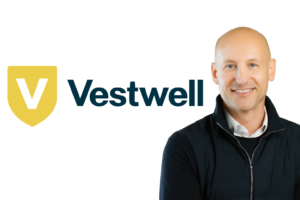
Vestwell’s $385M Series E: The Fintech Infrastructure Play Quietly Transforming Workplace Savings
While much of the fintech spotlight continues to chase consumer apps, neobanks, and AI-driven trading tools, one of the most consequential transformations in financial services is unfolding in a far less glamorous — yet vastly more impactful — corner of the industry: workplace savings and retirement infrastructure.
Vestwell’s recently announced $385 million Series E funding round represents more than a large capital raise. It reflects a structural shift in how investors, employers, and financial institutions view the future of long-term savings. By doubling the company’s valuation to approximately $2 billion, the financing underscores growing confidence in infrastructure-focused fintechs that generate predictable revenue while solving deeply embedded industry inefficiencies.
In many ways, Vestwell’s trajectory mirrors a broader maturation of the fintech ecosystem itself.
A Funding Round That Signals Market Evolution
The scale and composition of Vestwell’s Series E round immediately distinguish it from typical late-stage financings. The investment was co-led by Blue Owl Capital and Sixth Street Growth, with participation from a roster of globally recognized institutional players, including Neuberger Berman, Morgan Stanley, Franklin Templeton, HarbourVest Partners, and TIAA Ventures.
Such investor profiles matter. Unlike venture capital firms primarily seeking rapid, high-risk growth multiples, these institutions often prioritize durability, recurring revenue streams, and long-term sector exposure. Their involvement suggests that Vestwell is increasingly perceived not as a speculative fintech disruptor, but as a foundational financial infrastructure provider.
This distinction is critical in the current funding environment, where capital efficiency and sustainable economics have replaced growth-at-all-costs narratives. Investors are increasingly rewarding fintech companies capable of demonstrating profitability alongside expansion — a balance Vestwell has emphasized through its reported $200 million+ in annual recurring revenue and continued platform growth.
Why Retirement Infrastructure Is Ripe for Reinvention
Retirement and workplace savings systems have historically lagged behind other segments of financial services in technological modernization. Legacy recordkeeping platforms, fragmented service providers, and compliance-heavy workflows have long produced friction for employers, advisors, and employees alike.
For small and mid-sized businesses, offering retirement plans has traditionally meant navigating:
-
Complex regulatory requirements
-
Administrative overhead and manual processes
-
Limited flexibility in plan design
-
High operational costs
These structural barriers have contributed to persistent participation gaps, particularly among employees working in smaller organizations.
Vestwell’s platform is designed to address these challenges at their root. Rather than building a consumer-facing financial product, the company has focused on creating a technology-driven infrastructure layer that simplifies plan creation, automates compliance workflows, and integrates seamlessly into payroll and benefits ecosystems.
This infrastructure-first strategy aligns with one of fintech’s most powerful long-term trends: embedding financial services directly into existing operational systems rather than forcing users to adopt standalone platforms.
From Retirement Provider to Unified Savings Engine
One of the most compelling aspects of Vestwell’s growth story is its evolution beyond traditional retirement plan administration. The company is increasingly positioning itself as a unified savings engine, enabling multiple financial goals to coexist within a single employer-driven framework.
This includes capabilities for:
-
Employer-sponsored retirement accounts
-
Emergency savings programs
-
Education-focused savings vehicles
-
Specialized accounts such as ABLE plans
-
Flexible benefit-linked financial solutions
Such diversification reflects changing workforce dynamics. Employees today seek holistic financial wellness tools rather than isolated retirement products. Employers, in turn, are recognizing that comprehensive savings benefits can improve retention, engagement, and overall employee satisfaction.
By expanding its platform architecture, Vestwell is effectively capturing a broader share of the workplace financial lifecycle.
The Payroll and Benefits Integration Advantage
A defining strength of Vestwell’s model lies in its deep integrations across payroll, HR, and advisor networks. This design choice produces powerful behavioral and operational advantages.
Automatic payroll deductions dramatically increase savings consistency. Seamless onboarding reduces adoption friction. Unified dashboards enhance user visibility. For employers, integrated systems reduce administrative burden and compliance risk.
In contrast, standalone financial apps often struggle with sustained engagement, as users must actively manage contributions outside of their daily workflows. Vestwell’s infrastructure embeds savings into routine compensation cycles, turning participation into a default behavior rather than an exception.
This mechanism helps explain the company’s expanding base of millions of active savers and rapidly growing assets administered.
Technology, Automation, and the Compliance Equation
Workplace savings systems operate within one of the most tightly regulated environments in financial services. Precision, auditability, and operational resilience are non-negotiable.
Vestwell’s technology-centric approach leverages automation to reduce manual errors, streamline reporting, and standardize compliance processes. AI-driven features further enhance personalization and decision support, enabling tailored savings guidance without escalating advisory overhead.
For institutional investors, such capabilities represent scalable efficiency gains in a sector historically constrained by labor-intensive workflows.
For employers and advisors, they translate into simplified administration and reduced operational risk.
Industry Implications: The Rise of Infrastructure-Driven Fintech
Vestwell’s funding milestone also highlights a broader industry pivot. Early fintech waves primarily targeted consumer experiences — payments, peer-to-peer transfers, trading, and lending. Today’s most durable opportunities increasingly lie in financial infrastructure modernization.
Infrastructure-driven fintechs benefit from:
-
Embedded distribution channels
-
High switching costs once adopted
-
Recurring revenue models
-
Network effects through integrations
-
Lower sensitivity to consumer sentiment cycles
These characteristics tend to attract institutional capital seeking long-term stability rather than speculative upside.
Vestwell’s trajectory exemplifies this shift, positioning the company alongside a new class of fintech firms reshaping foundational financial systems rather than merely front-end interfaces.
Strategic Momentum and Platform Expansion
Recent strategic moves — including acquisitions and expanded partnerships — further reinforce Vestwell’s platform ambitions. Consolidation within the retirement technology space allows the company to broaden its client base while accelerating economies of scale.
Scale, in turn, is particularly powerful in infrastructure businesses. As assets, participants, and integrations grow, operational leverage improves, strengthening both margins and defensibility.
Looking Ahead: A Structural Growth Opportunity
Several macroeconomic and demographic forces continue to support Vestwell’s long-term relevance:
-
Growing global retirement savings gaps
-
Increased employer focus on financial wellness benefits
-
Digitization of payroll and benefits systems
-
Rising demand for automated compliance solutions
-
Workforce expectations for seamless digital experiences
Together, these dynamics suggest that workplace savings infrastructure may represent one of fintech’s most underappreciated growth frontiers.
Conclusion: Quiet Transformation, Lasting Impact
Vestwell’s Series E financing ultimately reflects more than investor enthusiasm for a single company. It highlights the expanding importance of infrastructure-centric innovation in financial services — innovation that may not dominate headlines, yet fundamentally reshapes how individuals build long-term financial security.
In a fintech landscape often defined by volatility and shifting narratives, Vestwell’s progress illustrates the enduring value of solving deeply rooted systemic challenges.
The modernization of workplace savings is not merely a technology story. It is a structural evolution in how financial wellbeing is delivered, managed, and scaled — and Vestwell is increasingly positioned at its center.