Log9 Materials: India’s Battery Tech Pioneer and Its Turbulent Journey
Log9 Materials: India’s Battery Tech Pioneer and Its Turbulent Journey
Log9 Materials: India’s Battery Tech Pioneer and Its Turbulent Journey
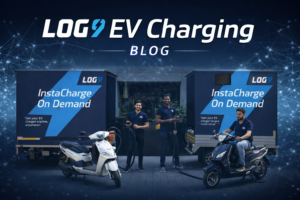
India’s electric vehicle revolution has been powered in no small part by homegrown innovators determined to reduce the country’s dependence on imported energy technology. Among the most ambitious of these is Log9 Materials — a deep-tech startup that dared to build battery cells from scratch in India, only to find itself caught in a storm of market forces and financial turbulence.
Founding and Vision
Log9 Materials was founded in 2015 by Dr. Akshay Singhal, who launched the company during his time as a BTech student at IIT Roorkee and simultaneously enrolled for a PhD in nanotechnology at the same institute to help solidify its foundation. The company was built on a clear and ambitious mission: to pioneer responsible energy by developing indigenous battery technology that could reduce India’s reliance on imported cells, particularly from China. Positioning itself as the only Indian company holding in-house competencies spanning everything from electrode materials to cell fabrication to battery packs, Log9 set itself apart from the many firms that simply assemble imported components.
Technology at the Core
Log9 Materials specializes in nanotechnology-driven energy storage solutions and stands as India’s first commercial lithium-ion cell manufacturer, holding 16 graphene patents and developing advanced batteries for EVs and industrial applications with fast charging and exceptional thermal stability. The company’s flagship products were built around Lithium-Titanium-Oxide (LTO) chemistry, a technology known for its exceptional cycle life and rapid charging capabilities. Log9’s batteries were designed to charge up to 9x faster, last 9x longer, and deliver superior performance compared to conventional EV batteries. Over time, its intellectual property portfolio grew to over 25 registered patents, primarily in the inorganic chemistry and advanced materials categories.
Funding and Growth
Log9’s early promise attracted significant investor interest. In October 2019, the company raised $3.5 million in a Series A round led by Sequoia Surge (now Peak XV) and Exfinity Venture Partners, followed by an $8.5 million Series A+ in 2021 from Amara Raja Batteries. In total, Log9 Materials raised over $90 million across 16 funding rounds from more than 81 investors, including notable names such as Petronas, Catamaran Ventures, and Anicut Capital. Revenue grew strongly in the initial years as fleet operators adopted Log9’s battery-as-a-service model. The company achieved 48% revenue growth in fiscal 2024, reaching ₹110.37 crore. Plans were equally bold, with Log9 announcing intentions to invest ₹2,350 crore in manufacturing expansion, including ₹2,000 crore for a new gigafactory planned for 2025.
Strategic Partnerships
Log9 pursued an aggressive partnership strategy to scale both domestically and globally. In 2024, the company formed a key alliance with Japan’s Musashi Seimitsu Industry, aimed at integrating Log9’s battery solutions with Musashi’s e-Axle systems for EV powertrains, targeting two- and three-wheeler segments for enhanced energy efficiency and global exports. The company also partnered with US-based Zeta Energy for lithium-sulfur battery research. At its annual Day Zero event in 2024, Log9 launched two notable products — NexMile, a next-generation commercial EV battery pack offering double the battery life and three times faster charging, and Amphion, a dedicated EV asset management platform for fleet operators.
The Unraveling
Despite the optimism, serious cracks began to appear. A key strategic misstep was the company’s pivot from its core LTO batteries to lithium-iron-phosphate (LFP) production between 2023 and 2024. LTO cells, priced at around $350 per kWh, proved too costly for India’s price-sensitive EV market. However, the pivot to LFP required substantial retooling investments just as Chinese LFP imports dropped to $45–53 per kWh, completely undercutting Log9’s offerings and eroding its competitive differentiation. Legal battles with fleet operators, asset repossession, and a spiralling debt cycle led the company to a severe cash crunch by mid-2025. Starting in late 2024, Log9 laid off around 180 employees, reducing headcount to roughly 30–40 by May 2025, while closing facilities in Hyderabad, Jaipur, Mumbai, and Chennai.
Insolvency and Legacy
The National Company Law Tribunal (NCLT) Bengaluru Bench admitted insolvency applications against Log9 Materials and Log9 Mobility in November 2025, following defaults totalling INR 6.7 crore, placing the companies under creditor review with a moratorium on assets including its Bengaluru manufacturing facility. Jupiter Electric Mobility stepped in to acquire Log9’s railway and e-truck battery divisions in October 2024, preserving at least a portion of the technological work built over a decade.
Log9 Materials stands as both an inspiration and a cautionary tale — proof that India can build world-class deep-tech battery innovation, but also that scaling it sustainably demands matching technological ambition with sharp market realism and disciplined financial management.