The Unseen Fracture: Why Our Cybersecurity Obsession is Missing the Human Heartbeat of Security
The LinkedIn message from Sairaj Mahesh arrived like a welcome breath of fresh air. An invitation to speak my truth about cybersecurity – not as a vendor pushing tools, but as someone who’s felt the gritty vibration of factory floors, smelled the ozone near industrial control panels, and witnessed the quiet panic in an engineer’s eyes when the SCADA screen flickers red. My journey – from Siemens’ industrial nerve centers to safeguarding the complex ecosystems of L&T – taught me a brutal, beautiful lesson: we’ve built an entire industry around securing systems, while tragically neglecting the human systems that make them breathe, break, and ultimately, secure them.
We talk ad nauseam about Zero Trust, AI-driven threat detection, and quantum-resistant cryptography. We pour billions into firewalls and SIEMs. Yet, the headlines scream the same story: a phishing email bypasses all that tech because an exhausted operator clicked just once. A misconfigured cloud bucket leaks terabytes because the brilliant developer prioritized speed over a tedious security checklist. A critical patch remains unapplied in a power plant’s OT network because the maintenance team fears downtime more than a theoretical breach. Our greatest vulnerability isn’t a software bug; it’s the unspoken fracture between our technological ambition and the messy, brilliant, fallible humans operating within it.
This isn’t a new observation. But we keep treating it like a minor footnote – a “people problem” to be solved with mandatory, eye-glazing compliance training. That’s the fundamental flaw. We see humans as the weakest link, a liability to be managed, rather than the essential core, the very reason security exists. Security isn’t about protecting data for data’s sake. It’s about protecting people: the factory worker whose safety depends on a secure PLC, the patient whose life hangs on a hospital’s unbreeched medical device, the small business owner whose livelihood vanishes with a ransomware attack.
Here’s the uncomfortable truth I’ve learned standing knee-deep in industrial control systems and enterprise networks: Technical controls fail because they are designed in isolation from the human context. Consider the OT/ICS environment I’ve spent years in:
- The Engineer’s Dilemma: An operator is trained to keep the production line running at all costs. Security protocols demanding downtime for patching feel like sabotage to their core mission. We blame them for not patching, but we never asked why the system makes patching feel like choosing between security and their job security. Security fails when it demands sacrifice without offering a path to shared success.
- The Cloud Conundrum: Developers in fast-paced startups are heroes, building the future at breakneck speed. Telling them “security slows you down” is like telling a race car driver to drive with the parking brake on. We need security embedded as fuel, not as a speed bump – intuitive, enabling, part of the creative flow. When security feels like friction, innovation finds a way around it, not through it.
- The Boardroom Blind Spot: Executives obsessed with quarterly results see security as a cost center, a necessary evil. They don’t see the human capital being eroded – the burnout from constant breach anxiety, the loss of trust when customers flee, the stifled innovation because teams are too scared to try new things. Security isn’t just about avoiding loss; it’s about enabling human potential within a safe space to create.
This is where true thought leadership must pivot. We need to move beyond “securing the perimeter” to “cultivating the core.” It’s time for a paradigm shift:
- From “User Error” to “System Empathy”: Stop designing security for humans as if they were predictable machines. Design with them. Observe their workflows in manufacturing plants, cloud dev shops, and control rooms. What actually causes friction? What risks do they truly understand? Make security intuitive, almost invisible – like the guardrails on a highway that guide without impeding the journey.
- From Compliance Checklists to Psychological Safety: A culture where reporting a near-miss phishing attempt is celebrated, not punished, is infinitely more secure than one with perfect audit scores but terrified employees hiding mistakes. Security thrives in environments of trust and open communication, not fear and blame. This starts at the top – with founders and boards modeling vulnerability.
- From Technical Metrics to Human Outcomes: Stop measuring success only by “mean time to patch” or “number of blocked attacks.” Measure the human impact: “Did security empower the engineer to feel confident and keep production running?” “Did the developer ship faster because security was integrated seamlessly?” “Did the customer trust us more because we handled their data with visible respect?” Security’s ROI is measured in human confidence and operational resilience.
The most innovative startups and enterprises I’ve engaged with aren’t just buying the latest AI security tool. They’re asking: “How does this make our people feel safer, more capable, and more trusted in their mission?” They understand that the firewall protecting their cloud platform is only as strong as the developer who feels empowered to use it correctly, and the factory floor is only as secure as the technician who feels safe reporting a suspicious sensor reading.
Cybersecurity isn’t a technical challenge wrapped in a human problem. It is the human problem, wrapped in technology. Our obsession with the perfect algorithm, the impenetrable vault, has blinded us to the living, breathing, sometimes messy, always essential human element that is both the target and the solution.

The next evolution of cybersecurity won’t be found solely in a lab. It will be forged on the factory floor, in the developer’s IDE, in the quiet conversations between a plant manager and a security analyst who finally speak the same language – the language of shared purpose, mutual respect, and the profound understanding that true security isn’t about locking people out; it’s about building a world where they can safely create, connect, and thrive.
This is the perspective I carry – not from a conference stage, but from the hum of industrial machinery and the quiet urgency of a control room. It’s time our industry’s thought leadership reflected the beating heart within the machine. Let’s build security that serves humanity, not the other way around.
Author:
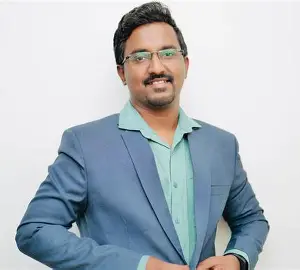
Manndaar Waghmare is the CEO of Vulnuris,

a cybersecurity company pioneering a human-centric approach to digital defense. With years of experience at the intersection of technology and behavioral science, Manndaar is a vocal advocate for reshaping how organizations perceive and implement security. His work challenges conventional paradigms that rely solely on tools and compliance, instead emphasizing the overlooked human dimension as the core vulnerability—and strength—within security systems.
In his widely discussed blog, “The Unseen Fracture: Why Our Cybersecurity Obsession is Missing the Human Heartbeat of Security,” Manndaar critiques the industry’s overreliance on technical controls while neglecting the behavioral patterns, motivations, and everyday habits of people—the real frontline of cybersecurity. He calls for a radical rethinking of how we build trust, foster awareness, and design systems that work with humans, not around them.
Under his leadership, Vulnuris is not just solving for breaches—it’s reengineering security culture from the inside out.