How Emergent’s $70 M Series B Is Redefining Software Creation — A New Era of AI-Driven “Vibe Coding”
How Emergent’s $70 M Series B Is Redefining Software Creation — A New Era of AI-Driven “Vibe Coding”
Emergent’s surge from startup to global powerhouse reflects a seismic shift in how software is created — empowering millions with AI and attracting top-tier capital in record time.
In January 2026, Indian-origin AI startup Emergent announced a $70 million Series B funding round led by Khosla Ventures and SoftBank Vision Fund 2, with strong participation from Prosus, Lightspeed, Together Fund, and Y Combinator. This fresh investment not only infuses the company with new capital, it also highlights a broader industry conviction: AI-powered application creation is transitioning from niche to mainstream.
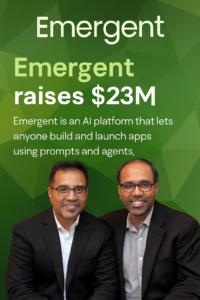
The funding round came just three months after Emergent’s $23 million Series A, reflecting both rapid execution and strong market demand for tools that democratize software development.
A Strategic Series B: $70 Million and a Tripled Valuation
Emergent’s Series B round is significant for several reasons:
-
Amount raised: $70 million
-
Lead investors: Khosla Ventures, SoftBank Vision Fund 2
-
Participating investors: Prosus, Lightspeed, Together Fund, Y Combinator
-
Implied valuation: ~ $300 million — more than three times its valuation just months earlier
This investment is notable not just for the size — but because it marks SoftBank’s first new investment in an Indian startup in over three years, signaling renewed global interest in early-stage AI platforms.
According to co-founder and CEO Mukund Jha, the new funds will be directed toward:
-
Accelerating AI agent and product development
-
Expanding global operations, including plans for a European office
-
Scaling engineering and research teams in San Francisco and Bengaluru
-
Launching new enterprise-grade features and creative tools
Emergent’s Mission: From Idea to App With Natural Language
Emergent’s core innovation lies in its agentic “vibe coding” platform, which lets users build full-stack web and mobile applications from simple natural language prompts — without traditional coding.
Instead of requiring engineering teams or long development cycles, Emergent’s platform uses autonomous AI agents to:
-
Generate user interfaces and layout
-
Configure backend logic, databases, and APIs
-
Handle authentication, payments, and integrations
-
Perform testing, deployment, and scaling
In doing so, it eliminates the traditional technical bottlenecks that have long constrained software creation for non-developers and small teams.
This approach enables entrepreneurs, creators, and business owners to go from concept to production-ready application with far lower cost, time, and complexity than conventional development.
Explosive Growth: Users, Revenue & Adoption
Emergent’s funding success is supported by stellar performance metrics since its launch:
-
~5 million users across more than 190 countries
-
$50 million in annual recurring revenue (ARR) reached within roughly seven months of launch
-
Target to surpass $100 million ARR by April 2026 as adoption grows
This growth underscores a massive addressable market: individuals and small businesses eager to build digital products without traditional development resources.
Unlike many tools that stop at prototypes, Emergent’s platform supports entire application lifecycles — from initial idea to live deployment — positioning it as a potential category-defining AI platform in software creation.
Funding Journey: From Seed to Series B
Emergent’s rise has been remarkably fast and strategically progressive:
-
Seed round: $7 million from Y Combinator and Together Fund
-
Series A: $23 million led by Lightspeed in September 2025, with participation from Prosus, Together Fund, Y Combinator and notable angel investors. That round validated early traction with over 1 million users and ~$15 million ARR in the first 90 days.
-
Strategic investment: Secured funding from Google’s AI Futures Fund in December 2025, gaining model access and technical collaboration support.
-
Series B: $70 million led by Khosla and SoftBank in January 2026 — elevating Emergent into global scale mode.
In less than a year, Emergent has transitioned from early traction to one of the most well-capitalized AI startups focused on democratizing software creation.
Why Emergent Matters: AI Meets Democratized Development
The rapid adoption of Emergent’s platform reflects a broader transformation in the software industry:
From No-Code to “Vibe Coding”
Traditional no-code and low-code tools made development accessible — but often limited functionality and deployment power. Emergent goes a step further by integrating agentic AI, where autonomous systems interpret user intent and execute across front-end, back-end, and infrastructure layers.
This model promises to:
-
Slash development costs
-
Accelerate time-to-market
-
Enable non-technical founders to build scalable products
-
Equip small businesses with tools once reserved for engineering teams
The Competitive Landscape
Emergent competes with other vibe-coding and AI development platforms such as Replit and Lovable, which have raised significant capital and built strong user bases. However, Emergent’s vertical integration — managing everything from design to deployment — and rapid revenue scaling set it apart.
For investors, backing platforms that generate durable revenue and tangible user outcomes is increasingly attractive, especially in contrast to AI models that remain largely exploratory.
Deploying Capital to Accelerate Innovation
The freshly raised funds will support a multi-pronged expansion strategy:
-
R&D and engineering growth in Bengaluru and San Francisco
-
New product development, especially around analytics, collaboration, and automation
-
Enterprise sales and partnerships to reach larger organizations
-
Opening a European office to support broader global operations
By investing in both product depth and global reach, Emergent is positioning itself to serve a diversified user base, from individual creators to enterprise teams.
Leadership and Vision: Democratizing Software
Emergent was founded in 2025 by twin brothers Mukund Jha and Madhav Jha, with a mission to make software creation universal — accessible to anyone with an idea, regardless of coding ability.
Mukund’s experience co-founding quick commerce startup Dunzo adds operational depth to his leadership, while the team’s emphasis on scalability and accessibility has propelled rapid adoption across diverse markets.
Conclusion: The Future of Software Is Inclusive and AI-Powered
Emergent’s $70 million Series B, dramatic valuation increase, and global adoption paint a clear picture: the era of traditional development is giving way to an AI-augmented future where ideas, not code skills, define what gets built.
As AI moves from assistance toward genuine autonomy, platforms like Emergent are not just reshaping how software is created — they’re reimagining who can create it. With its strong technical foundation, accelerating revenue, and world-class investor backing, Emergent stands at the forefront of this transformation.
In 2026 and beyond, the companies that enable innovation for everyone — not just developers — will define the next wave of digital growth.