From Zero to 45 Billion Dollars: The OpenFX Story
From Zero to 45 billion Dollars: The OpenFX Story
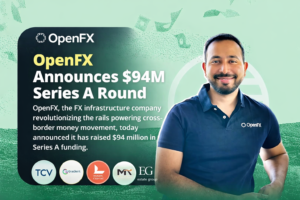
There are companies that compete within a market, and then there are companies that look at a broken system and decide to rebuild it entirely. OpenFX belongs to the second category. Founded in early 2024, this fintech company went from processing nothing to handling over 45 billion dollars in annual cross-border payment volume, raised 94 million dollars in Series A funding, and signed more than 100 institutional clients across four continents. All of this happened in just two years.
Where It All Began
The founder of OpenFX, Prabhakar Reddy, did not come up with the idea in a boardroom. Growing up in Dubai, he watched migrant workers stand in long queues at remittance centers, losing seven percent or more of their wages just in transfer fees, with money still taking days to arrive. That experience never left him.
Reddy had already built FalconX, an eight billion dollar digital asset brokerage, so he understood both traditional finance and modern blockchain technology. After spending time as an investor at Accel, he saw exactly what financial institutions needed. In early 2024, without any public announcement, he launched OpenFX and started building quietly.
The Problem That Needed Fixing
Cross-border payments have been running on infrastructure designed in the 1970s. Businesses moving large sums internationally wait two to five business days for settlement and pay heavy conversion fees. Over four trillion dollars in working capital sits locked in pre-funded accounts globally just to keep the system running. Domestic payments in most countries had already become instant, yet international money movement remained stuck decades behind.
OpenFX was built specifically to close that gap.
How the Platform Works
Rather than building another payment app for end users, OpenFX built infrastructure that other financial institutions could plug into. The platform connects traditional banking rails with digital systems, using stablecoins as a settlement bridge between markets. Local currency goes in on one end, value transfers across borders in near real time, and local currency comes out on the other side.
The result is that over 98 percent of transactions settle in under 60 minutes, compared to the industry standard of two to seven days. The platform supports over 40 currency trading pairs and operates around the clock, every day of the year.
The company also built its teams across Miami, London, Dubai, and Bangalore, recognizing that cross-border payment problems are deeply local. Understanding the regulatory environment in Brazil or liquidity challenges in Southeast Asia requires people who actually know those markets.
Growth That Speaks for Itself
The numbers tell the story clearly. In its first month, OpenFX processed 500,000 dollars. Eight weeks later, that became 500,000 dollars every week. Three months after that, 500,000 dollars every day. Eventually the platform reached 500,000 dollars every minute.
Within its first year, OpenFX scaled from zero to 10 billion dollars in annualized volume. Over the following nine months, that figure grew to 45 billion dollars. Revenue grew ten times over the same period. Clients today include MoneyGram, Yellow Card, neobanks, global payroll platforms, and remittance providers.
OpenFX raised 23 million dollars in seed funding in May 2025, then closed a 94 million dollar Series A in March 2026, led by Accel, Atomico, Lightspeed, North zone, and Pantera Capital, valuing the company at around 500 million dollars.
What This Story Represents
OpenFX was built on one simple belief: money should move as freely as data. Not in days. Not at the cost of a worker’s paycheck. Instantly, cheaply, and reliably across any border in the world.
Two years in, with 45 billion dollars flowing annually through its platform, OpenFX is proving that belief right, one transaction at a time.
OpenFX did not just build a faster payment system, it rebuilt the foundation that the entire global payments industry stands on. When money finally moves as freely as data, the world will look back and recognize this as the company that made it possible.